 Juvelook (PDLLA): What It Is, What the Studies Show and Its Approval Status
 Skin Booster Results and Aftercare: How Long Until You See Results, and What to Avoid After Injection
 Exosome Facial and Exosome Skincare: What They Are, What the Studies Show and Approval Status
 Meso Fat vs Masseter Botox: How to Slim the Face
 Fat Dissolving Injections for Belly and Arms: The Facts
 Collagen Stimulators Explained: PLLA, PDLLA, PN, Profhilo and Exosomes Compared
 What Are Fat Dissolving Injections (Meso Fat)? A Guide
 Double Chin Injections: Kybella vs Meso-Fat Blends
Vitamin C: How Topical, Oral, and Ampoule Forms Differ

In short
- Oral: establish whether your diet needs supplementation. [3]
- Topical: check the ingredient and formula, not just the serum name. [2]
- Ampoules: confirm the intended route on the label.
What vitamin C does
This water-soluble nutrient supports collagen formation and iron absorption, and acts as an antioxidant. [1]
When choosing a vitamin c product, first decide whether you are addressing dietary intake or looking for topical skin care. Then check the label against that purpose.
Read the topical formula
For a vitamin c serum, check the ingredient name. A review describes L-ascorbic acid as well studied but unstable and difficult to deliver through skin; some derivatives have different stability characteristics. [2]
Clinical evidence for topical formulas remains limited. Findings for a studied formula should not be treated as proof that every serum performs the same way. [2]
Ask which form the product contains, whether documentation for that formula is available, and what its storage label requires.
Consider food and total intake first
Oral supplements are used when dietary intake is inadequate. [3] Look beyond the tablet count: consider your food and any other supplements you take.
U.S. reference intakes for adults aged 19 and over are 90 mg daily for men and 75 mg for women, rising to 85 mg during pregnancy and 120 mg during breastfeeding. These describe total nutritional needs, not a supplement prescription for everyone. [1]
MedlinePlus advises against amounts above 2,000 mg daily because of stomach upset and diarrhea. That figure is not an intake target. [1]
Ampoules: confirm the intended route
Do not decide how to use a product from the word ampoule or a brown vial. Request its label and product information first.
For injectable vitamin C, separate medical indications from cosmetic marketing. The U.S. ascorbic acid injection label cited here covers scurvy when oral administration is impossible, insufficient, or contraindicated; check the indication of the actual product being considered. [4]
That label warns about kidney injury with prolonged high-dose use and hemolysis in people with G6PD deficiency. Share your medical history and previous test results with your doctor. [4]
Injectable products must be used by a licensed doctor in a licensed clinic. The doctor determines the amount and treatment plan after assessment. [5]
Questions before choosing
If your clinic is considering Kosdao Vitamin C Ascorbic Acid, request its label and product information for the doctor to review before deciding from the name or package photo.
For oral products, MedlinePlus advises keeping the container tightly closed and away from heat and moisture. [3] Check topical and injectable products against their own storage instructions.
- What is the active ingredient, and which route does the label specify?
- Who is the manufacturer, and is verifiable registration information available?
- Do the batch and expiry details on the box match the container?
- What storage conditions and instructions after opening apply?
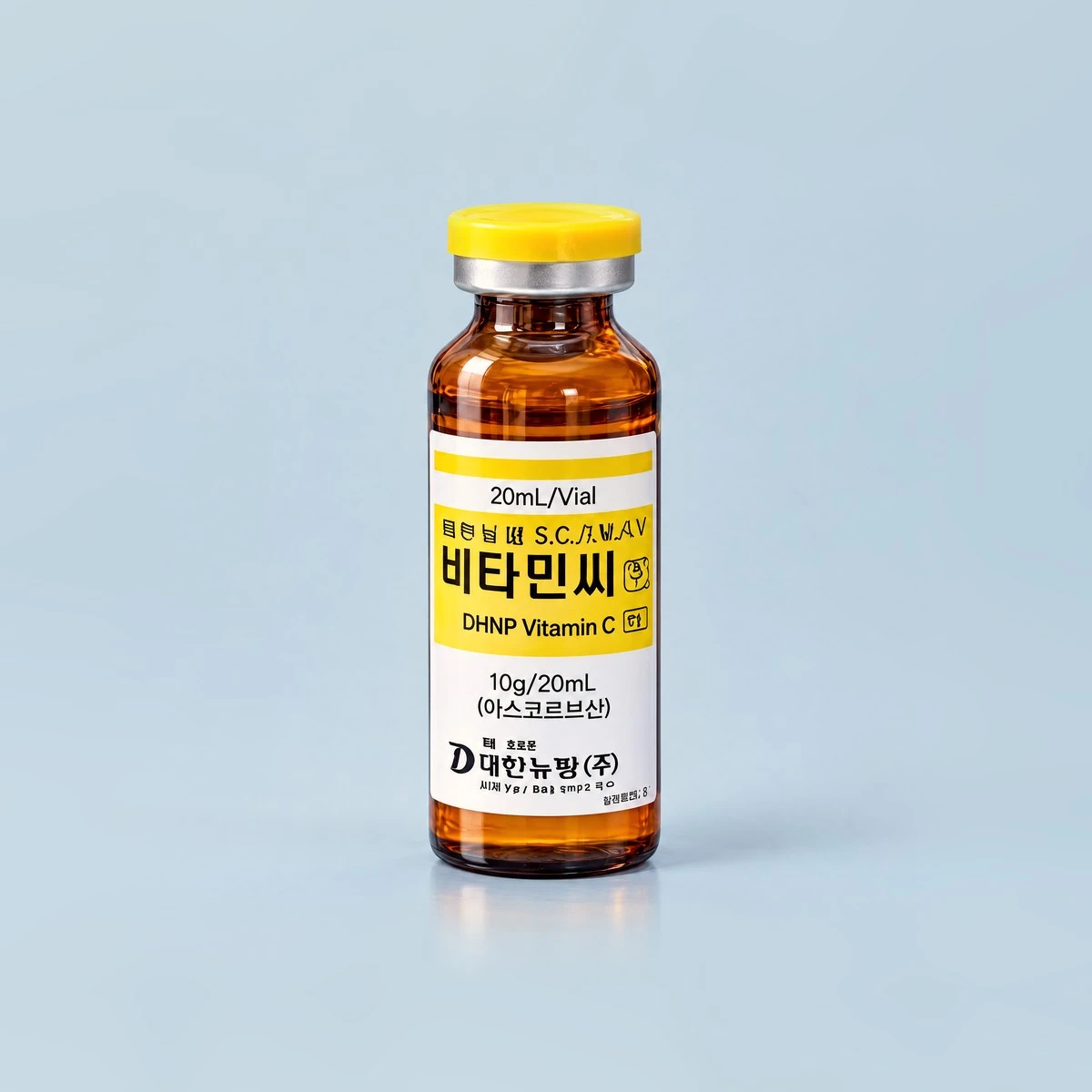
Daehan New Pharm vitamin C, 20 ml per vial
THB 1,890FAQ
What does vitamin C help with?
It supports collagen formation and iron absorption. [1] Start with your purpose when deciding between topical care and oral supplementation.
When should I take vitamin C?
Follow the product label or your doctor’s directions rather than a time promoted in advertising. [3] A pharmacist can clarify instructions for the particular formula.
What should I avoid taking with vitamin C?
Tell your doctor or pharmacist about all medicines, vitamins, herbs, and supplements you use so they can check combinations. [3] Do not stop prescribed medicines on your own.
Is taking 1000 mg of vitamin C every day dangerous?
This exceeds the daily reference needs of most adults, so ask whether supplementation at that amount is necessary. [1] Discuss diarrhea or nausea with your healthcare professional if they occur. [3]
How many 1000 mg vitamin C tablets should I take daily?
A single tablet count cannot be recommended for everyone. Have a pharmacist review the label and your other supplements, then follow the label or your doctor’s instructions. [3]
This information is general knowledge and does not replace a doctor's advice. Every procedure should be done by a licensed doctor.
References
- Manetti S, Dugdale DC, et al. Vitamin C. MedlinePlus Medical Encyclopedia, U.S. National Library of Medicine. 2025. https://medlineplus.gov/ency/article/002404.htmBack to text
- Al-Niaimi F, Chiang NYZ. Topical Vitamin C and the Skin: Mechanisms of Action and Clinical Applications. Journal of Clinical and Aesthetic Dermatology. 2017;10(7):14–17. https://pmc.ncbi.nlm.nih.gov/articles/PMC5605218/Back to text
- American Society of Health-System Pharmacists. Ascorbic Acid (Vitamin C). MedlinePlus Drug Information, U.S. National Library of Medicine. 2024. https://medlineplus.gov/druginfo/meds/a682583.htmlBack to text
- McGuff Pharmaceuticals, Inc. Ascorbic acid injection: prescribing information. DailyMed, U.S. National Library of Medicine. 2026. https://dailymed.nlm.nih.gov/dailymed/drugInfo.cfm?setid=388aad52-fc01-4784-9791-1dbc80c69306Back to text
- สำนักงานคณะกรรมการอาหารและยา. อย.เตือนหญิงสาว อย่าหลงเชื่อการฉีดฟิลเลอร์เพื่อเสริมความงาม. 2555. https://dis.fda.moph.go.th/detail-newsUpdate?id=321Back to text