












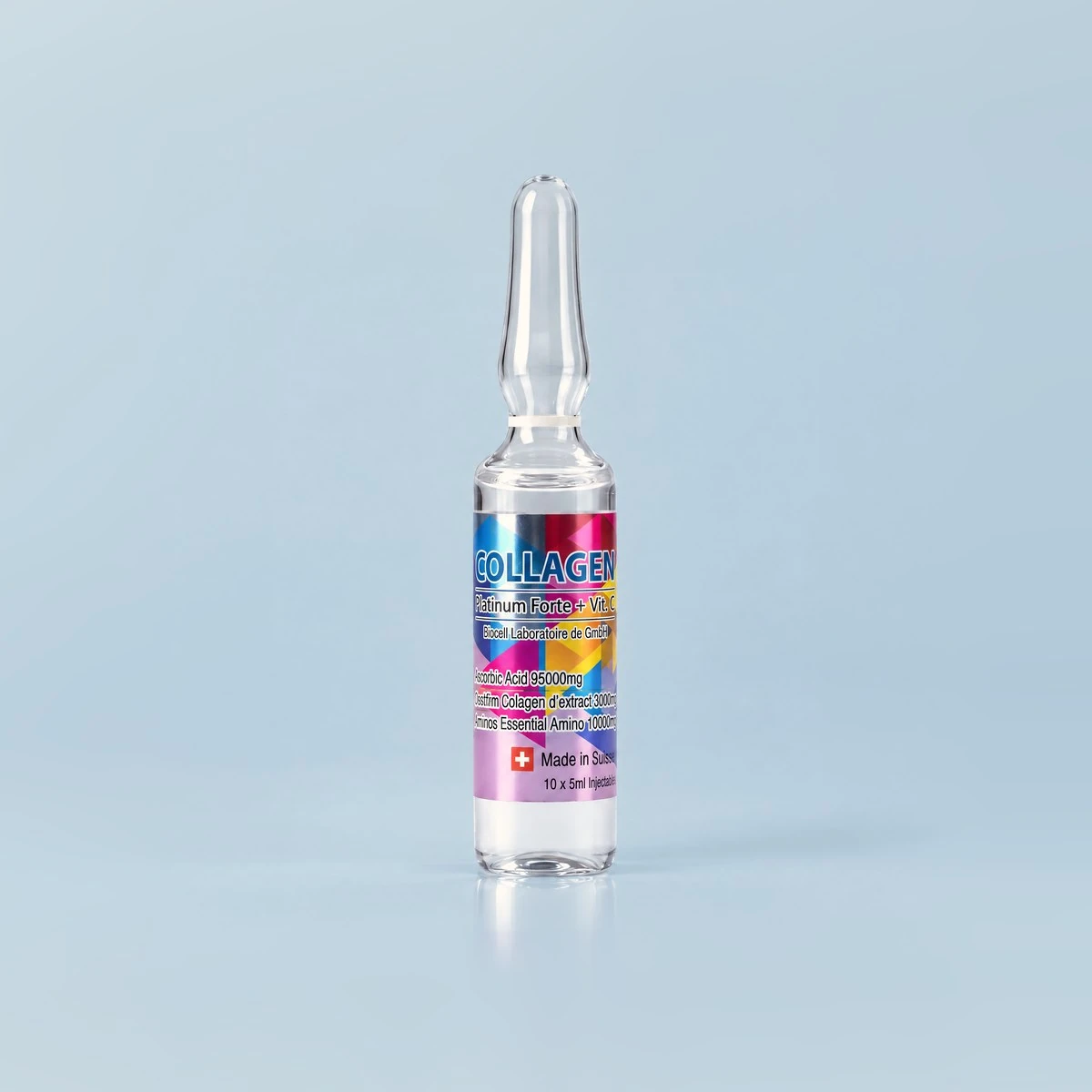
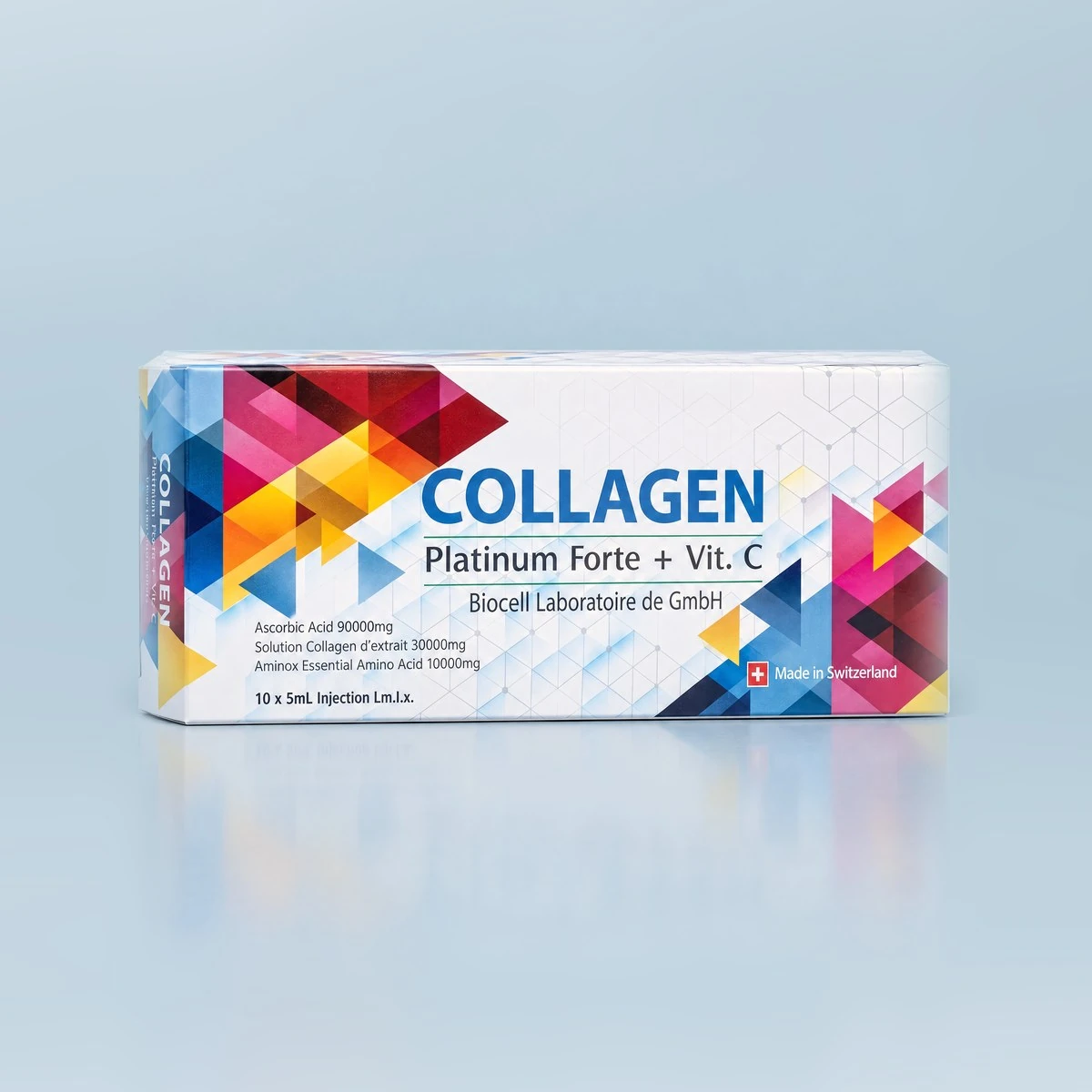

Biocell Collagen Platinum Forte + Vit C (collagen from Switzerland, replenishes moisture, firms skin)
THB 610
 Juvelook (PDLLA): What It Is, What the Studies Show and Its Approval Status
 Skin Booster Results and Aftercare: How Long Until You See Results, and What to Avoid After Injection
 Exosome Facial and Exosome Skincare: What They Are, What the Studies Show and Approval Status
 Meso Fat vs Masseter Botox: How to Slim the Face
 Fat Dissolving Injections for Belly and Arms: The Facts
 Collagen Stimulators Explained: PLLA, PDLLA, PN, Profhilo and Exosomes Compared
 What Are Fat Dissolving Injections (Meso Fat)? A Guide
 Double Chin Injections: Kybella vs Meso-Fat Blends

Collagen is the most abundant structural protein in the body, acting like a frame that holds tissue together. It is found in skin, bone, cartilage and tendon. In skin it sits in the dermis, where it helps keep skin firm and elastic. The body makes its own, though more slowly with age. Collagen comes in several forms: oral, topical, and ampoules for injection, which a doctor uses.
References
Close to thirty types of collagen have been identified, told apart by how the molecules assemble and where they sit. All share a triple-helix structure. The five most discussed are types I, II, III, IV and V.
Type I is the most abundant and forms the framework of skin, bone, tendon and ligament. Type II is found in the cartilage that cushions joints. Type III occurs in muscle, blood vessels and internal organs. Type IV sits in the supporting layer of the skin, and type V is found in the cornea, hair and some layers of skin.
When a product says only collagen, check whether the label names the type or the source. The single word does not tell you which type it is or what it is made from.
The body makes new collagen throughout life, but with age production slows and existing collagen breaks down faster, so skin becomes thinner and less elastic. Collagen cannot be measured with a blood test, so people usually notice general signs such as thin skin that marks easily or stiffer joints.
Several factors speed up the loss, including smoking, strong sun without protection and a diet high in sugar. Making collagen needs amino acids from dietary protein and also needs vitamin C, which is why some products place vitamin C beside collagen.
Injectable vitamin C is a separate group in the shop, found under Skin Vitamins.
Oral collagen is broken down in the gut into amino acids and short peptides, which the body then uses to build proteins where it needs them. It does not travel to the skin intact. Topical collagen in a cream or serum has large molecules and stays mainly in the outer layer of skin.
With an injectable form, a medical professional places the solution under or within the skin, bypassing digestion. Collagen injected is not the same as the body making more of its own, and each form does a different job. None replaces the others in every case.
Other skin injectables exist too, such as those grouped under Skin Booster, which are a different kind of substance from collagen. The choice of form and injection site is made together with a doctor.
Anyone considering injectable collagen should be assessed by a doctor first, because an injectable ampoule is a clinical product, not something chosen by preference.
Tell the doctor everything relevant: any earlier allergy to a drug, food or ingredient, since collagen comes from several sources; pregnancy or breastfeeding; inflamed or infected skin at the planned site; regular medicines, especially those that make bleeding easier; and any chronic or autoimmune condition.
It helps to bring a list of the medicines and supplements in use, any earlier injections or skin procedures, and what you hope for from your skin. The doctor then says whether it suits you and which product to use.
Start with the product name and form, and confirm it is meant for injection. Then read the ingredient list to see whether it is collagen alone or collagen with other substances such as vitamin C, and whether the label states where the collagen comes from.
Next look at the manufacturer, the country of manufacture, the language on the box, and the batch number and expiry date. Some imported products come as both a Thai-label pack and an overseas pack, and the language and details on the box can differ, so compare them clearly.
Registration status depends on each country's rules and can be checked with the drug and health-product regulator of the country where it will be used. Storage and precautions should follow what the label says.
An ampoule is a sealed glass vial that keeps the solution clean until it is opened. The correct storage depends on each product's label, since some are kept at room temperature and others need refrigeration. The general rule is to keep them away from strong sunlight, heat and damp.
Before use, clinical staff usually look over the outside: the vial is not cracked or chipped, the box and label are intact, the solution is not unusually cloudy or full of particles the label does not mention, and the expiry date has not passed. An opened vial should not be kept for later.
If the condition of a product is in doubt, stop and ask the seller or the manufacturer. Do not decide by eye alone.
These are collagen ampoules for clinic use, grouped by the ingredients shown in the name and product details.
The collagen with vitamin C group is Biocell, which lists collagen and vitamin C in the same ampoule. It suits those who want to look at a product combining these two ingredients.
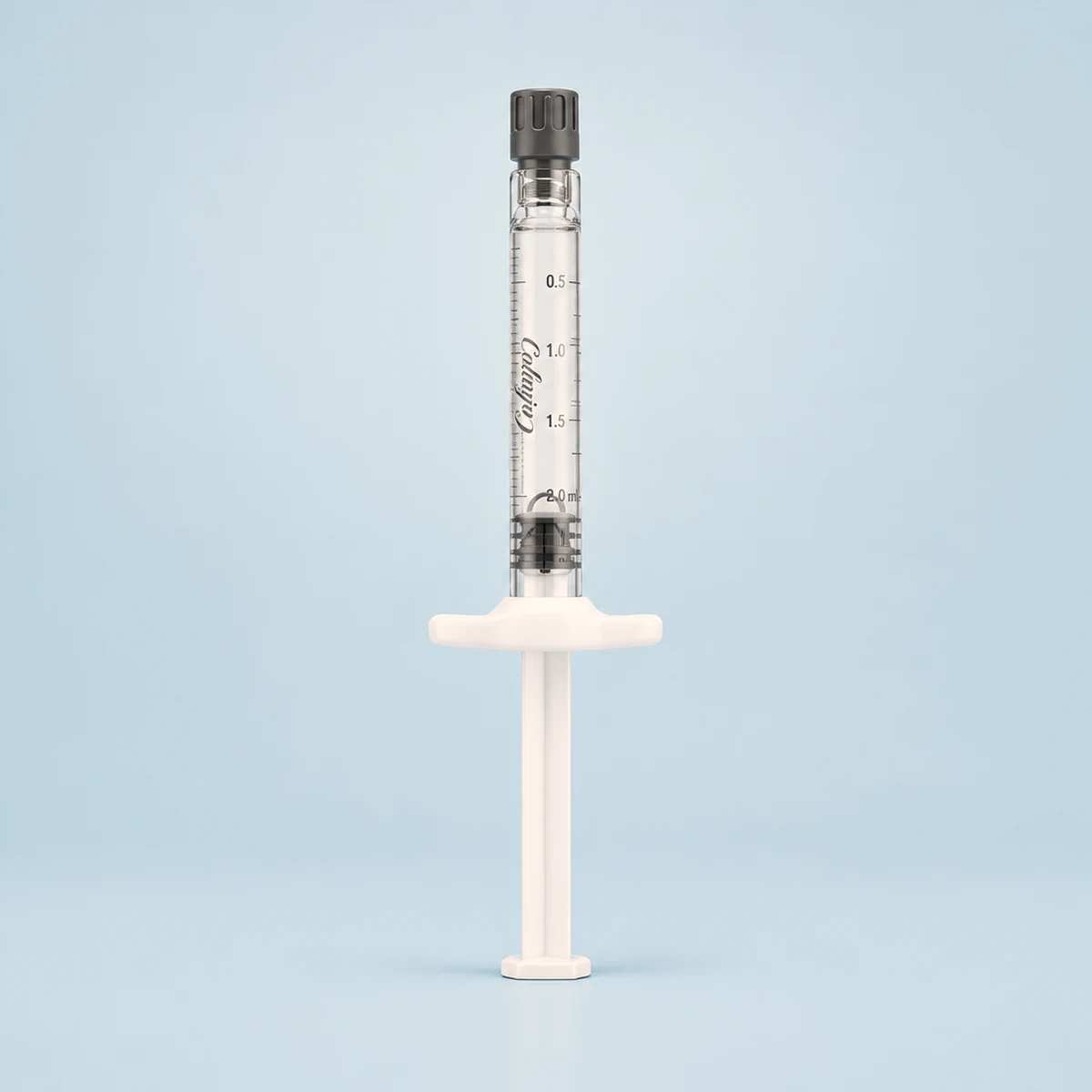
The injectable collagen group is Collaju, available as both a Thai-label pack and an imported pack. Buyers should choose the one that matches the label language and documents the clinic needs.
All of them are used under a doctor's care. Compare the name, ingredients and packaging on the label before choosing. It helps to decide whether an added ingredient such as vitamin C is wanted, and whether a Thai-label or an imported pack is needed.