













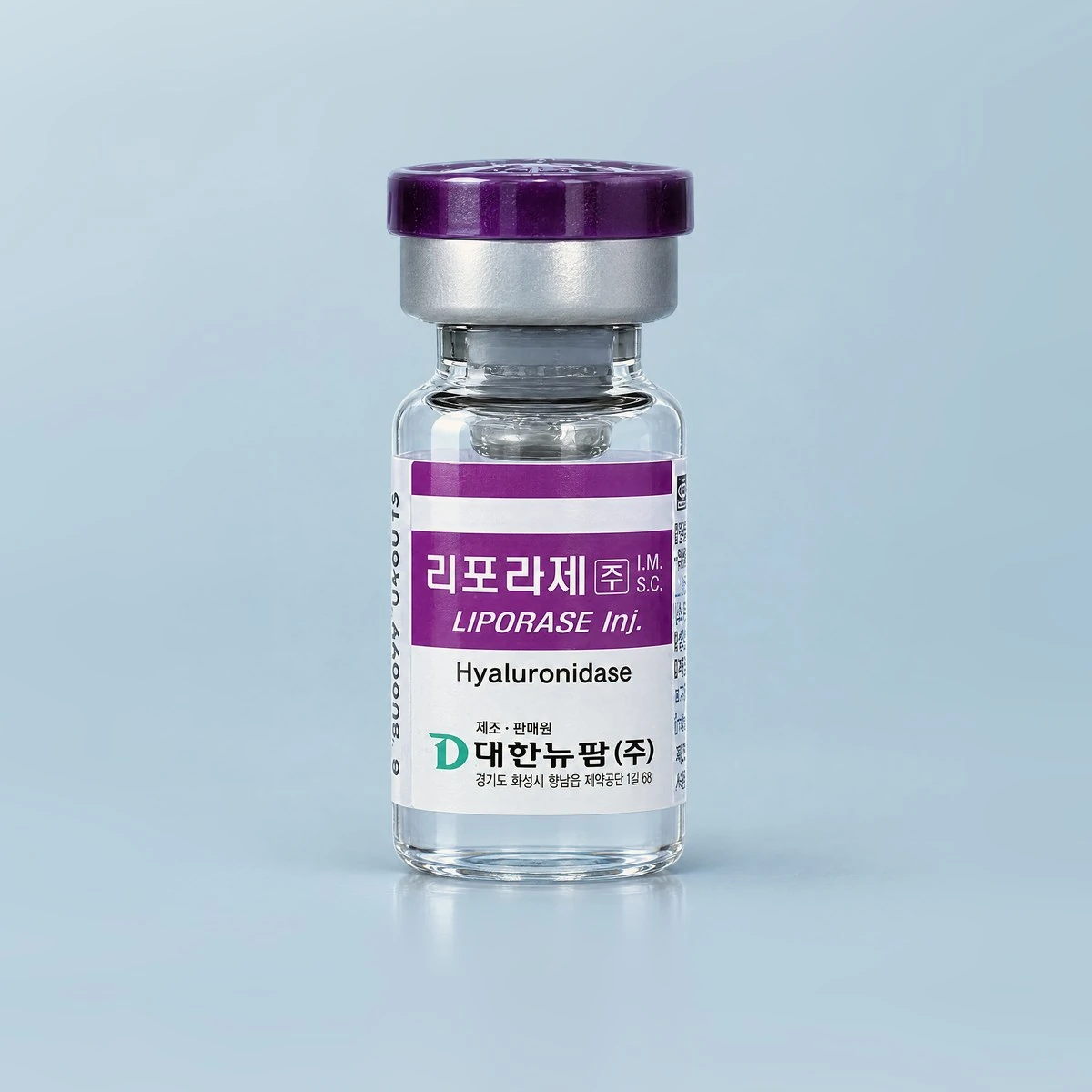
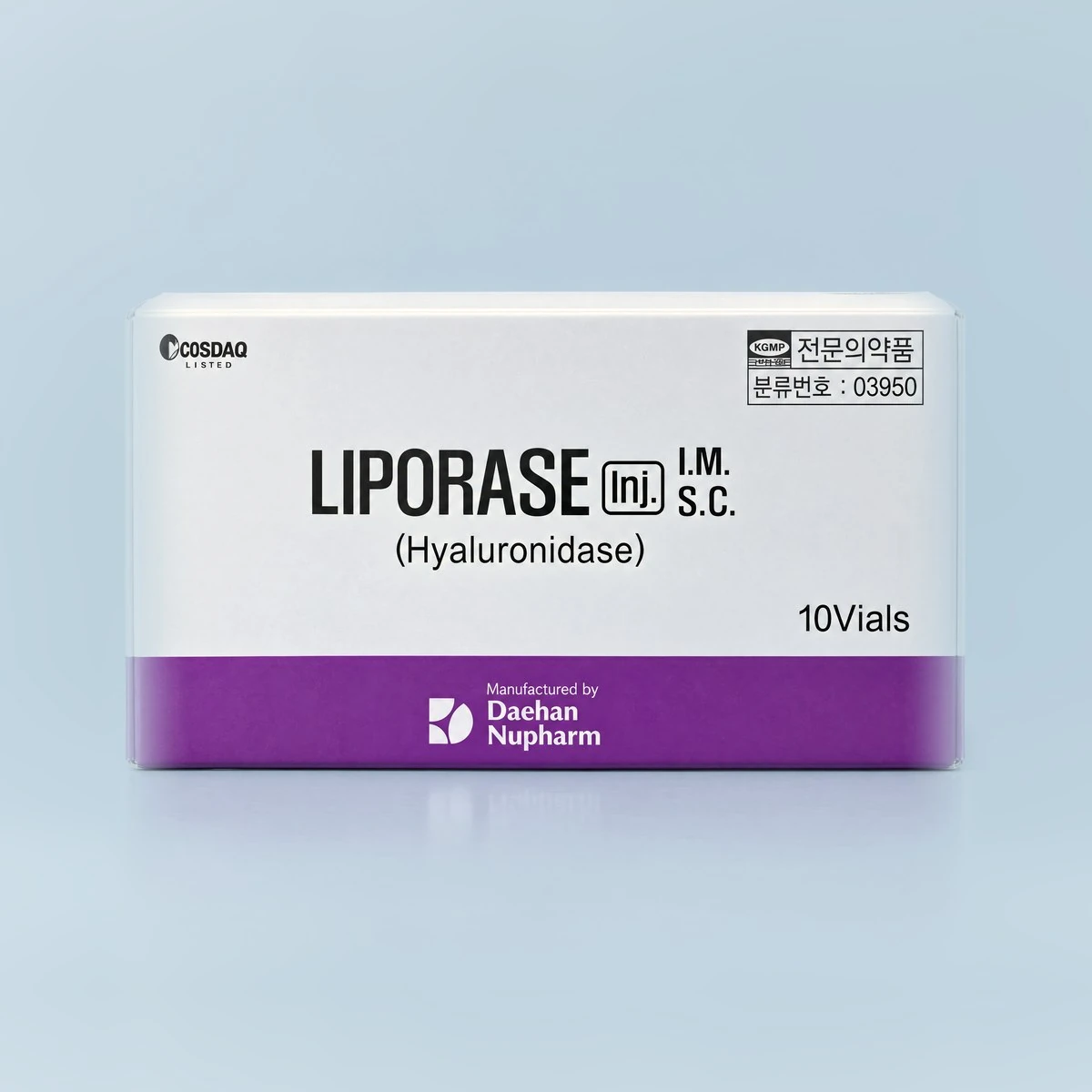

Liporase (Korea)
THB 1,500
 Juvelook (PDLLA): What It Is, What the Studies Show and Its Approval Status
 Skin Booster Results and Aftercare: How Long Until You See Results, and What to Avoid After Injection
 Exosome Facial and Exosome Skincare: What They Are, What the Studies Show and Approval Status
 Meso Fat vs Masseter Botox: How to Slim the Face
 Fat Dissolving Injections for Belly and Arms: The Facts
 Collagen Stimulators Explained: PLLA, PDLLA, PN, Profhilo and Exosomes Compared
 What Are Fat Dissolving Injections (Meso Fat)? A Guide
 Double Chin Injections: Kybella vs Meso-Fat Blends

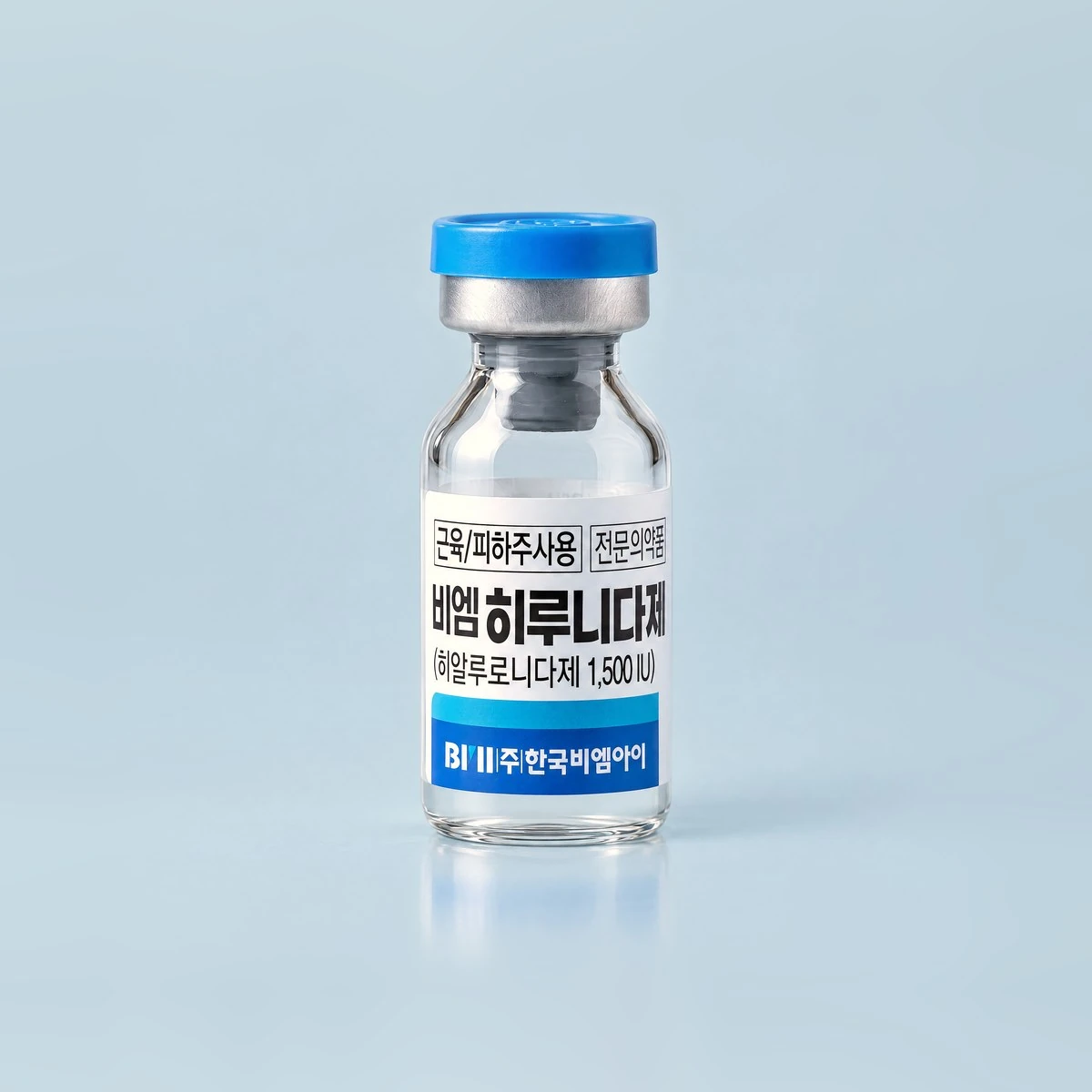
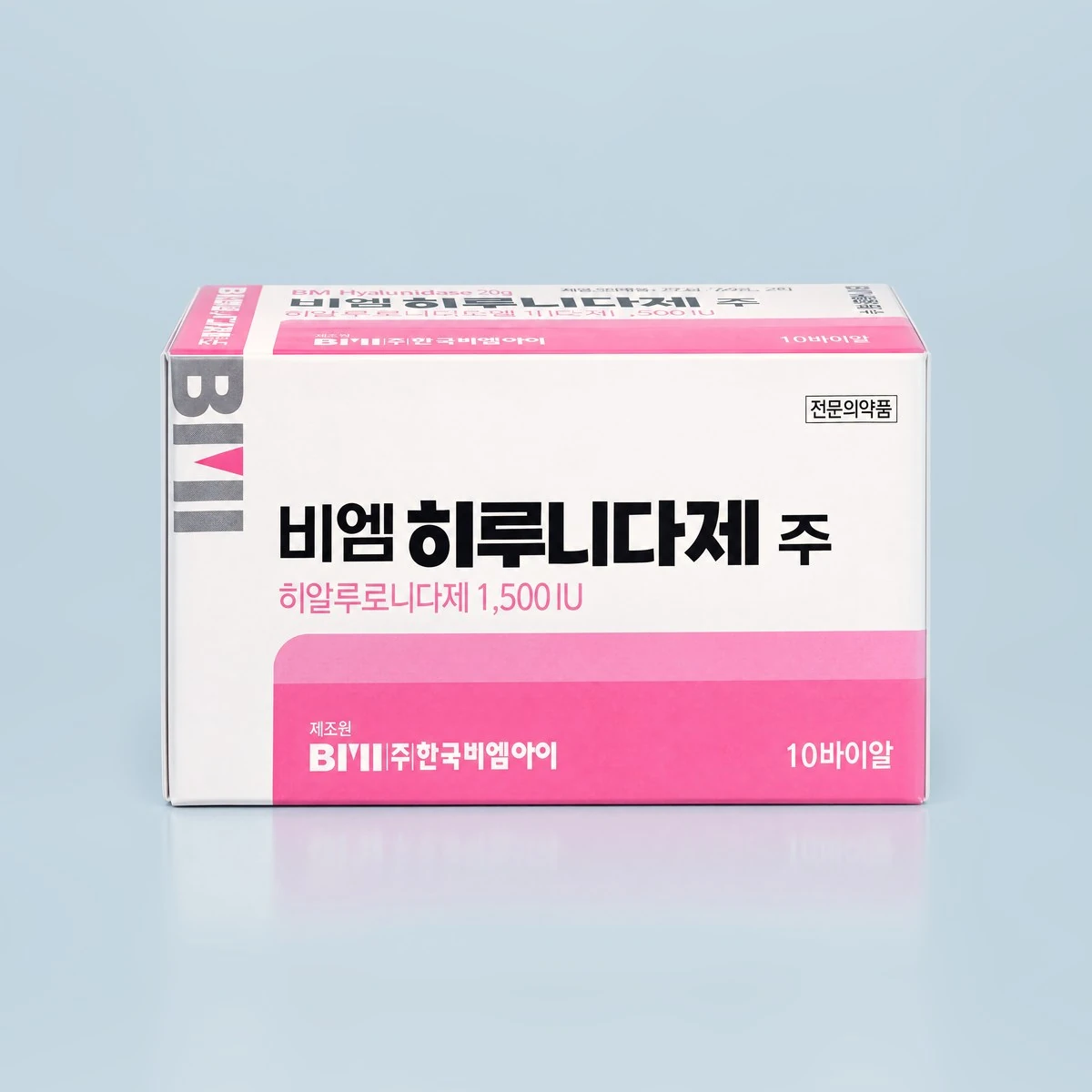
Hyaluronidase is an enzyme that breaks down hyaluronic acid, which is why a doctor can inject it to dissolve hyaluronic acid filler. This category covers 1,500 IU vials such as Liporase and Hyalase, for clinics that want to know the product before choosing. Because the enzyme acts on hyaluronic acid, it is mainly relevant to filler of that type.
Start with what the enzyme does, which fillers it relates to, when doctors use it and the allergy cautions, then look at the box name, strength and storage on the label. Those details tell products apart; the plan for using one belongs to the doctor.
 Sold out
References
Hyaluronidase is a family of enzymes that cleave hyaluronic acid, a component of tissue. Once hyaluronic acid is broken down, the material becomes less viscous and the tissue more permeable, which is why the enzyme can be injected to dissolve hyaluronic acid filler. A review in JMIR Dermatology describes it as an enzyme that depolymerises hyaluronic acid and can reverse complications of this type of filler.
The same enzyme has other medical uses: it helps other injected drugs spread and absorb, and it is combined with local anaesthetics in eye surgery. The Hydase label published by the FDA lists it as an adjuvant for drug absorption, for subcutaneous fluids and for contrast agents in urography. Dissolving filler is not among the indications on that label.
Hyaluronidase relates to hyaluronic acid fillers, the group most often used in filler treatment. The FDA notes that removal can be harder with fillers that are not hyaluronic acid, especially so-called permanent ones. Knowing which filler was used before therefore matters to the doctor, and the box name or earlier records can help identify it.
Hyaluronic acid fillers do not all break down at the same rate. The review notes that a filler's physical properties influence how the enzyme degrades it, so a brand or category name alone does not settle the question. The doctor assesses what is in the tissue and whether the enzyme is appropriate.
The JMIR Dermatology review lists non-inflamed nodules, caused by overcorrection, misplaced filler or migration, among the common complications, and describes hyaluronidase as a tool doctors use for them. The enzyme is a corrective instrument for clinicians, not a product for self-treatment.
Another situation is filler entering a blood vessel, which the FDA calls the most concerning risk, with possible tissue death, vision problems or stroke. The review states that vascular occlusion and blindness need immediate enzyme treatment. Skin that turns white, grey or blue near the injection site, or any change in vision, calls for immediate medical care.
This category holds 1,500 IU vials such as Liporase and Hyalase. As the review summarises, the hyaluronidase available worldwide is either animal-derived or a human recombinant, so read each label for the source of the enzyme rather than judging from the brand name.
The box name, strength per vial, manufacturer, batch number and expiry date are what tell products apart. The IU figure is the strength the maker assigns; it does not compare formulas between brands. Two items with the same strength can still differ in other ingredients and in enzyme source, which only their own documents show.
The review says allergic reactions to hyaluronidase are uncommon in aesthetic use and that the recombinant type is thought to cause fewer, though long-term data are limited. Known hypersensitivity to the enzyme or any ingredient is a contraindication on the Hydase label. The review also highlights cross-reactivity in people allergic to bee or wasp stings.
The Hydase label adds that the enzyme should not be injected into or around an infected or acutely inflamed area, because it could spread a localised infection. Allergy history, infections and current medicines should be shared with the doctor. Pre-testing is the doctor's call; the review says it is not warranted in emergencies.
The Hydase label published by the FDA says to store the vials in a refrigerator at 2 to 8 degrees Celsius and not to freeze them. That is an example for the same type of enzyme; the conditions for Liporase, Hyalase or any other brand must come from the label and documents of that exact item, including the directions on preparation and how long a prepared dose may be kept.
Check the expiry date, batch number, vial condition and the appearance of the powder or solution as the documents describe. If packaging looks abnormal or directions are incomplete, the clinic's responsible person should review it before use. Storing to the label is a product matter; deciding whether to use it is a doctor's matter.
The FDA says filler injection should be treated as a medical procedure and carried out by a licensed, experienced provider. Hyaluronidase is prescription-only in the United States, the United Kingdom and Australia, as Wikipedia summarises, so it is a product for doctors and clinics.
Amount and technique are decided case by case. The review notes that recommendations on dose differ between authors and that too much enzyme can remove all of the filler. This category therefore describes the product only. Tell the doctor which filler was used, where, and what concerns you.