 Juvelook (PDLLA): What It Is, What the Studies Show and Its Approval Status
 Skin Booster Results and Aftercare: How Long Until You See Results, and What to Avoid After Injection
 Exosome Facial and Exosome Skincare: What They Are, What the Studies Show and Approval Status
 Meso Fat vs Masseter Botox: How to Slim the Face
 Fat Dissolving Injections for Belly and Arms: The Facts
 Collagen Stimulators Explained: PLLA, PDLLA, PN, Profhilo and Exosomes Compared
 What Are Fat Dissolving Injections (Meso Fat)? A Guide
 Double Chin Injections: Kybella vs Meso-Fat Blends
Skin boosters vs. dermal fillers: What to know before talking to your doctor

In short
- Skin boosters focus on skin quality; fillers focus on filling and volume. [1][2]
- Both categories include HA formulations, so check the specific product. [1][3]
- Ask to see the label and discuss risks before deciding. [2]
Understanding skin boosters
Skin boosters are a category of products used to address skin quality. A review describes various ingredients, including hyaluronic acid (HA). [1] HA is a sugar found in tissues such as skin and can bind water. [3]
A skin booster is not necessarily a thin liquid containing only non-cross-linked HA: the review discusses both cross-linked and non-cross-linked formulations. [1] The category name is only a starting point. Ask about the exact formulation your doctor proposes.
The review also identifies gaps in scientific data and calls for larger controlled studies. [1] Ask whether the evidence being discussed relates directly to the proposed formulation.
Understanding dermal fillers
Dermal fillers are injectable tissue-filling materials. The US FDA lists correction of folds and volume augmentation among approved uses for specific products. [2] HA is one of several filler materials. [3]
If you are considering filler injections, ask how the proposed product’s indications relate to the treatment area. [2] Discuss whether your concern involves folds, volume, or skin quality before choosing a brand.
Compare purpose and formulation
| What to compare | Skin boosters | Dermal fillers |
|---|---|---|
| Purpose discussed | Skin quality, including hydration and texture [1] | Folds or volume, according to product indications [2] |
| Ingredients | Various formulations, including HA [1] | Various materials, including HA [3] |
| HA cross-linking | Both cross-linked and non-cross-linked formulations [1] | Check the proposed formulation |
| Question for your doctor | How does evidence for this formulation address my skin concerns? | Is this product indicated for the proposed area? [2] |
Scroll the table →
Compare intended use and formulation: HA features in both skin-quality treatments and fillers. [1][3] Avoid choosing solely on whether a product is described as liquid or thick.
Match the label to the exact product
Ask for the full product name, variant, manufacturer, country of manufacture, form, pack size, batch number, expiry date, Thai registration documents, and storage instructions. Request missing documents before choosing.
One shop example is Cytocare 532 The Skin Rejuvenating Booster. The manufacturer’s page identifies HA with a Rejuvenating Complex and manufacture in France. [4] Compare these details with the actual pack, then let the doctor choose after assessment.
Before putting stock away, have the clinic team read the storage instructions for that specific variant. Ask the supplier to clarify missing information rather than assigning a temperature based on the category name.
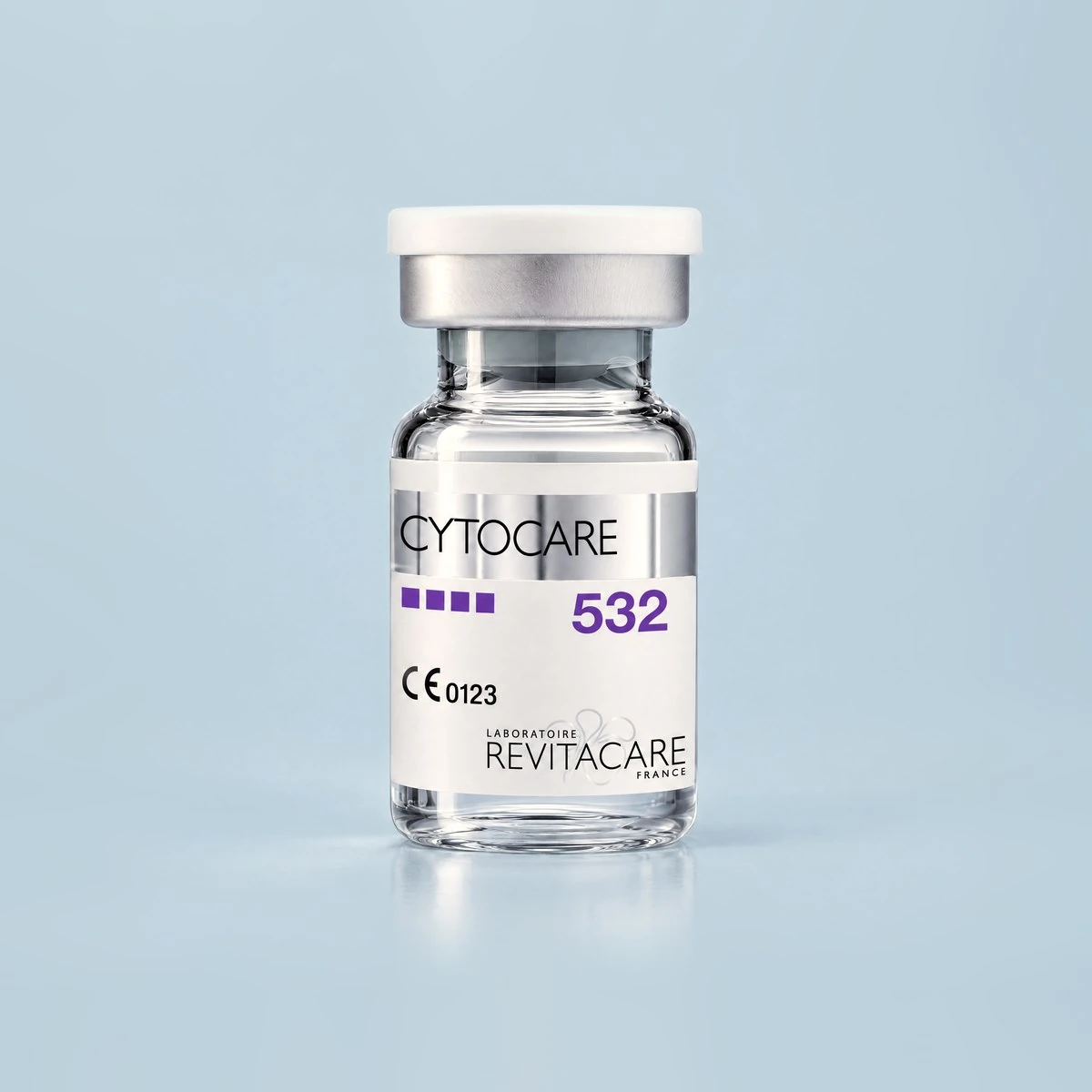
French non-cross-linked hyaluronic acid, 5 mL vials
THB 990Discuss risks and follow-up care
Injectable procedure products must be used by a licensed doctor in a licensed clinic. The doctor decides the quantity and treatment plan after assessing the patient.
Filler risks include swelling, bruising, and accidental injection into a blood vessel, which can cause tissue death or vision loss. [2] Seek immediate medical assessment for unusual pain, vision changes, or white, grey, or blue skin near the injection site. [2]
- Is my concern skin quality, folds, or volume, and how does this product address it?
- Can I see the actual product label and patient information? [2]
- What health history, medicines, and previous procedures should I disclose?
- What aftercare is needed, and who should I contact about unexpected symptoms?
FAQ
What is a skin booster?
It is a category studied for skin quality, with various ingredients and formulations, including HA. [1] Ask your doctor about the exact formulation and evidence.
What is a dermal filler?
It is an injectable tissue-filling material used for folds or volume according to its indications; HA is one of several materials. [2][3]
How long do dermal fillers last?
There is no single duration: the US FDA says it depends on the material and injection area. [2] Discuss the selected product’s label with your doctor.
Which skin booster should I choose?
Compare the manufacturer, country of manufacture, form, pack size, and labelled storage requirements. Ask about indications and formulation-specific evidence, then let the doctor choose after assessing your skin and health history.
How do botulinum toxin treatments differ from fillers?
Botulinum toxin reduces activity in certain muscles or blocks nerve signals, while fillers add fullness to tissue. [5][2] Explain your concerns so your doctor can assess the appropriate approach.
This information is general knowledge and does not replace a doctor's advice. Every procedure should be done by a licensed doctor.
References
- Rho NK, Kim HS, Kim SY, Lee W. Injectable “Skin Boosters” in Aging Skin Rejuvenation: A Current Overview. Archives of Plastic Surgery. 2024. https://pmc.ncbi.nlm.nih.gov/articles/PMC11560330/Back to text
- US Food and Drug Administration. Dermal Fillers (Soft Tissue Fillers). FDA. 2023; accessed 2026-10-07. https://www.fda.gov/medical-devices/aesthetic-cosmetic-devices/dermal-fillers-soft-tissue-fillersBack to text
- US Food and Drug Administration. FDA-Approved Dermal Fillers. FDA. 2020; accessed 2026-10-07. https://www.fda.gov/medical-devices/aesthetic-cosmetic-devices/fda-approved-dermal-fillersBack to text
- Laboratoire Revitacare. CYTOCARE 532. Official product page. n.d.; accessed 2026-10-07. https://revitacare.net/medical-devices/20-cytocare-532.htmlBack to text
- National Library of Medicine. Botox. MedlinePlus. Updated 2025. https://medlineplus.gov/botox.html